Through geology, habitat & Atlantic history
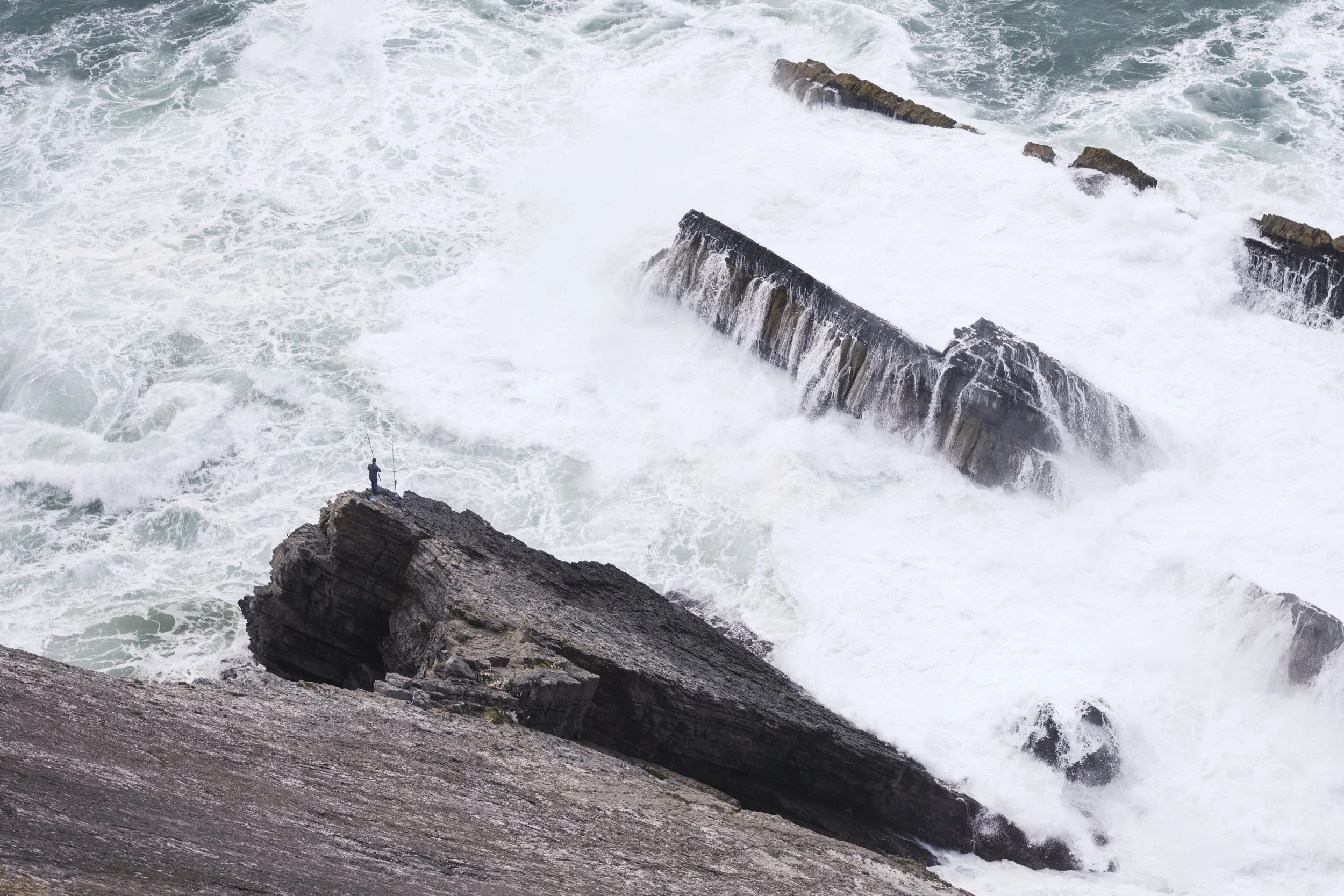
Portugal's western coastline is not simply a border between land and sea. It is the exposed edge of a much older story, written over hundreds of millions of years and carried into the present by the landscapes we see today. Its cliffs and headlands hold the memory of vanished oceans and ancient mountains, while the settlements scattered along its shores speak of generations whose lives have been shaped by the Atlantic. To walk this coast is to move through different chapters in the history of the Earth, discovering how geological processes have shaped not only the land itself but also the ways in which people have inhabited and understood it.
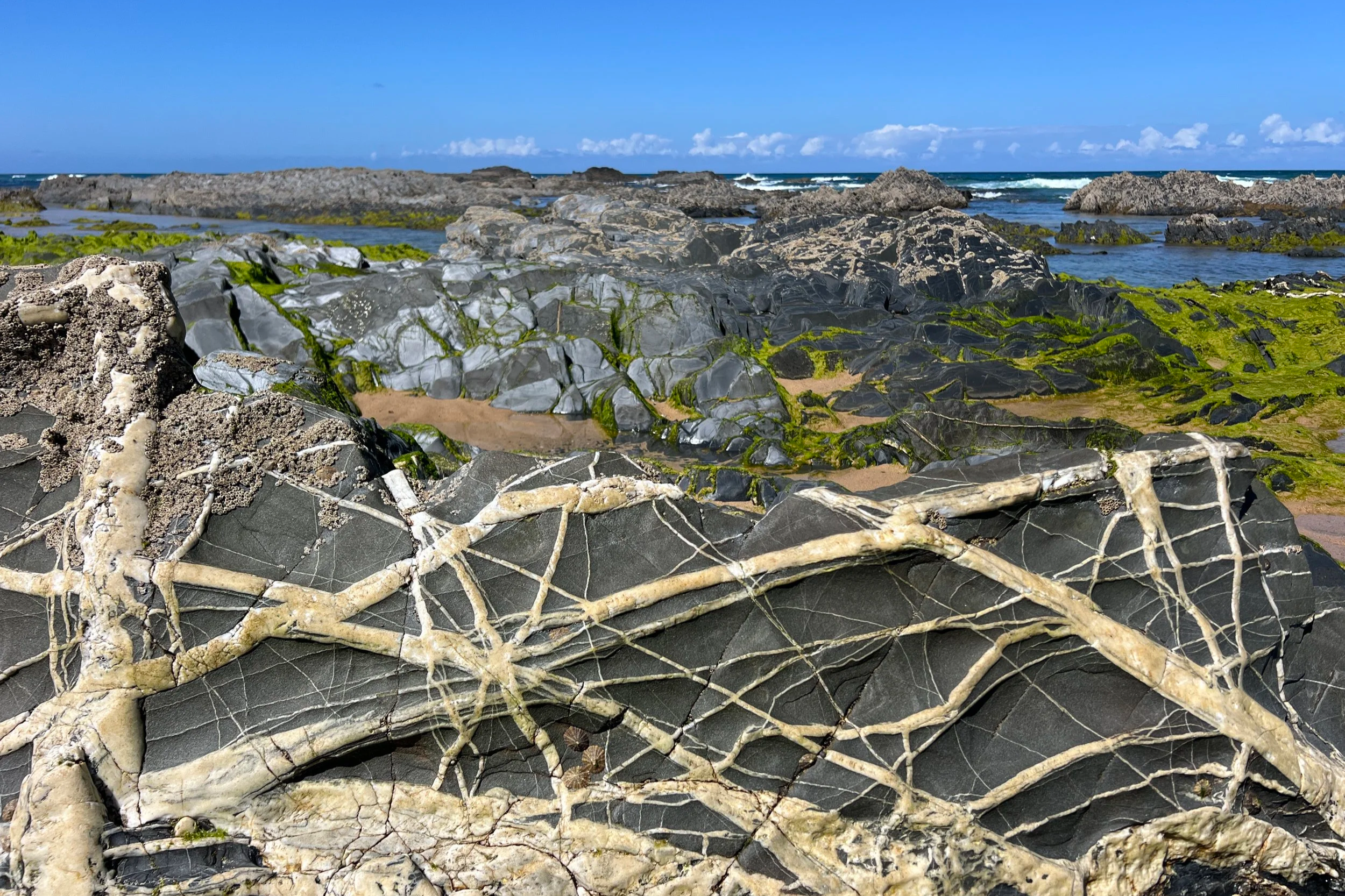
Some of its limestone cliffs preserve the remains of warm tropical seas that once covered this region. Elsewhere, much older rocks reveal the immense forces that shaped western Iberia long before the Atlantic Ocean existed. Beneath the present landscape lie the foundations of an ancient mountain chain, raised during the formation of the supercontinent Pangaea. These mountains may once have reached extraordinary heights, comparable to some of the great mountain ranges of our world today. Over immense stretches of time, they were gradually worn away, their rocks fractured and reshaped as continents shifted and the Atlantic began to open. The mountains themselves have long disappeared, but their foundations remain exposed, revealing a geological history that continues to influence the character of the land. It determines the shape of the cliffs and the formation of sheltered coves, influences the movement of sand along the beaches, and creates the conditions in which vegetation can take root against the salt-laden wind. Even the paths we follow are shaped by the underlying rock, sometimes crossing open coastal plateaus before descending through narrow valleys toward the sea.
Long before Portugal existed as a kingdom, people had already begun to make their lives within these landscapes. The coast offered access to food and water, while its valleys provided fertile ground for cultivation and higher ground gave communities places from which to observe and defend the surrounding territory. The earliest traces of this human presence reach far into prehistory, with evidence of occupation preserved in caves and ancient settlements. Neolithic communities left burial places and megalithic monuments that still bear witness to the beliefs and rituals of those who inhabited western Iberia thousands of years ago. As societies developed, fortified settlements appeared on prominent hills overlooking the coast and its river valleys. Roman occupation later brought new roads and trading networks, connecting the region to a Mediterranean world that extended far beyond the Iberian Peninsula. Along the shoreline, fishing and the processing of marine resources became part of a wider commercial economy, strengthening relationships between coastal communities and distant markets.
The centuries that followed brought profound political and cultural change. After the decline of Roman authority, the region passed through periods of Visigothic rule and, from the eighth century onward, came under Muslim governance. The gradual expansion of the Christian kingdoms would eventually lead to the formation of Portugal, leaving another layer of history upon a landscape already inhabited for millennia. Throughout these changes, the Atlantic remained a constant presence in the lives of coastal communities, providing a livelihood while demanding an intimate understanding of its dangers. Generations learned to recognise the changing weather and the movement of the tides, developing knowledge through daily observation and passing it from one generation to the next. This familiarity with the sea became part of the cultural identity of the coast and, over time, helped shape one of the defining chapters of Portuguese history.
Situated at the western edge of continental Europe, Portugal increasingly looked toward the Atlantic. Maritime knowledge developed alongside the construction of harbours and shipyards, while coastal fortifications protected places of strategic importance. The voyages of the fifteenth and sixteenth centuries drew upon this long familiarity with the sea, opening maritime routes that would connect Portugal to distant parts of the world. Much of that history remains visible today in fishing harbours occupying sheltered inlets and stone fortresses standing above the approaches to estuaries. In coastal towns, churches and monuments recall generations who departed across the Atlantic, sometimes never to return. Yet the most enduring traces are often found in ordinary life, where fishing traditions continue to follow rhythms established long before the modern world.
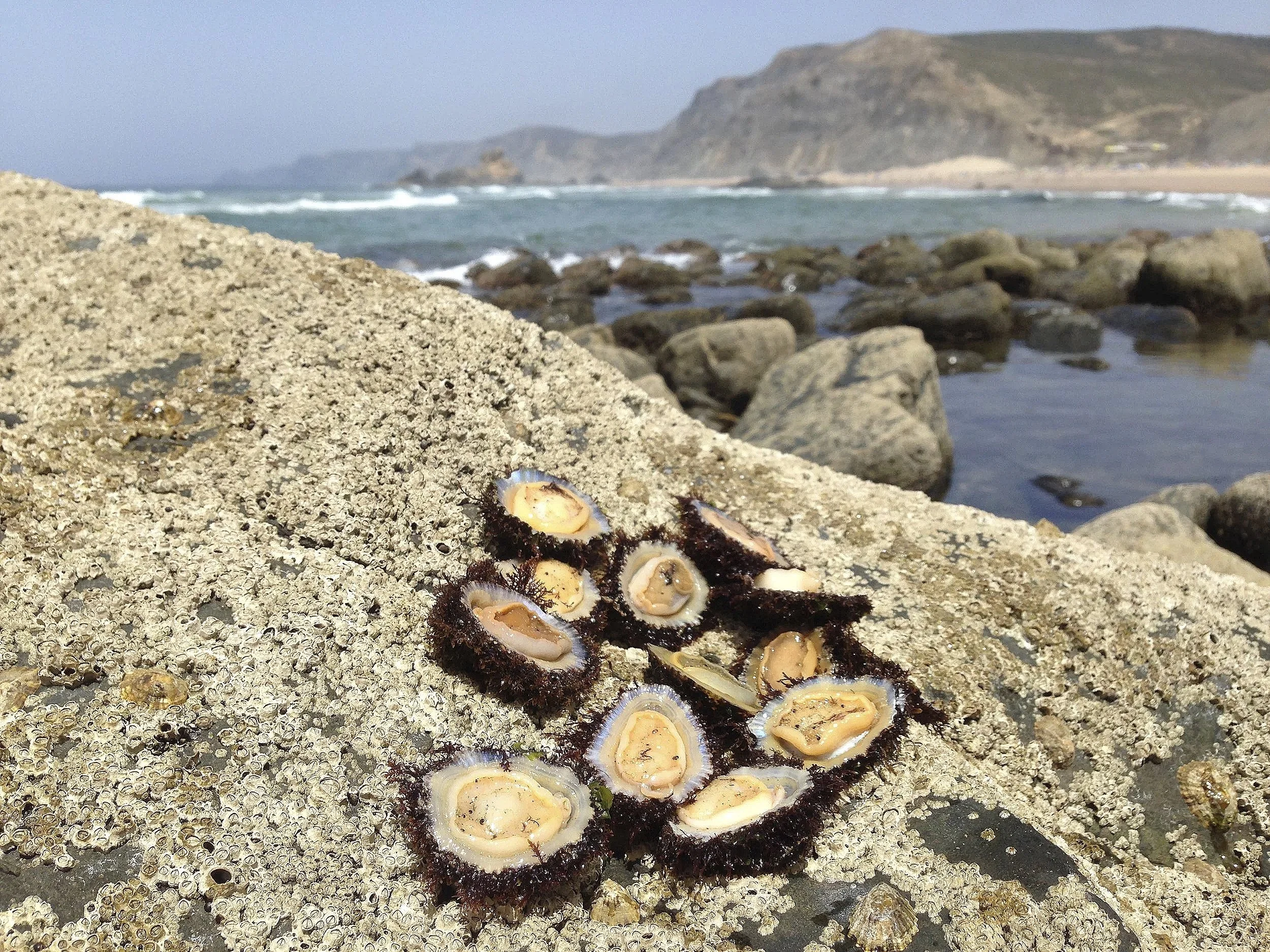
At low tide, the ocean reveals another dimension of this relationship. As the water retreats, rocky platforms emerge and tidal pools become accessible, allowing people to gather what the sea provides. Along stretches of the Portuguese coast, families still descend toward the shore in search of shellfish, while experienced gatherers know where to find octopus or the prized barnacles that cling to exposed cliffs. These practices require patience and an understanding of the ocean that cannot be learned from a map alone. An old saying captures this relationship particularly well: when the tide is low, the table is set. It reflects a time when the shore was as much a source of nourishment as the fields inland, and a connection between people and place that remains part of coastal life today.
The richness of this relationship is closely connected to the ecological diversity of the Atlantic coast, where the meeting of land and ocean creates a remarkable variety of habitats. Behind the beaches, dunes offer shelter to specialised plants whose roots help hold the shifting sand, while exposed headlands support low-growing vegetation capable of surviving persistent winds and salt spray. In sheltered valleys, more favourable conditions allow different plant communities to develop, and further inland the coastal landscape gradually gives way to cultivated fields and villages where centuries of human activity have created habitats of their own. The influence of both the Atlantic and the Mediterranean can be felt throughout this region, as the ocean moderates temperatures and brings moisture while the long, dry summers favour plants adapted to drought. In some places, rare and endemic species survive within narrow ecological niches, their distribution closely tied to the particular geology and exposure of the coast.
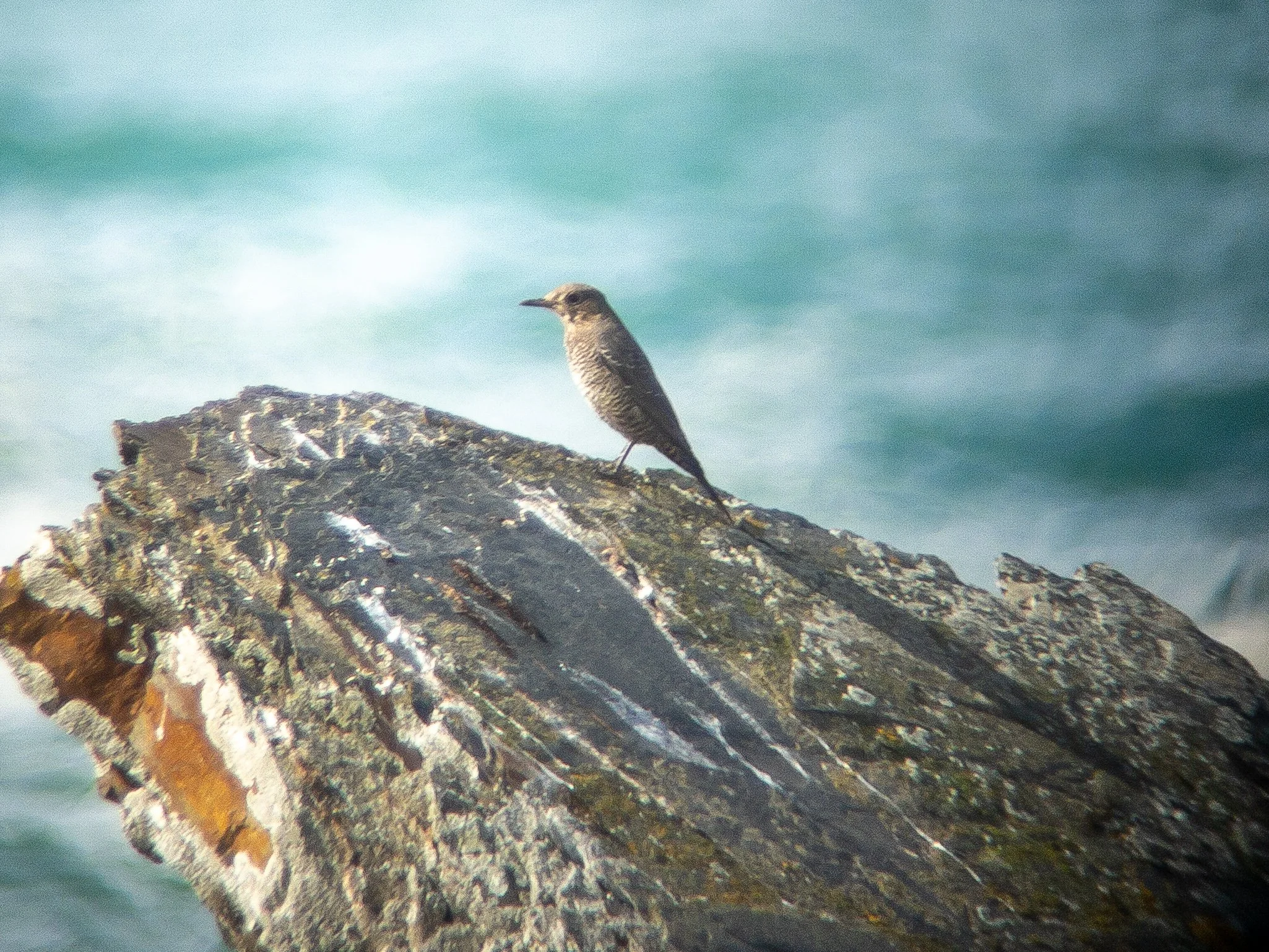
This diversity extends well beyond the vegetation. Portugal occupies an important position along the migratory routes connecting northern Europe and Africa, and the changing seasons bring a different presence to its shores throughout the year. In spring, birds return from their wintering grounds in Africa, following established routes northward toward their breeding territories. As autumn approaches, the movement reverses, while other species arrive from colder regions of Europe to spend the winter in Portugal's milder coastal environments. The estuaries become gathering places for large numbers of waterbirds, and the headlands offer opportunities to observe birds of prey moving along the coastline. Above the cliffs, seabirds use the rising winds to travel with remarkable ease, sometimes appearing almost motionless against the Atlantic sky. For those who take the time to observe, these seasonal movements reveal a landscape that is never quite the same from one visit to the next.
There is a continuity between these natural movements and the much longer history of the coast itself. The land was formed through the slow movement of continents, when ancient landmasses collided and mountains rose before gradually disappearing through erosion. The opening of the Atlantic established new boundaries and created the conditions for the landscapes and ecosystems we recognise today. Much later, people followed these shores in search of places to settle, building communities and developing ways of living with the sea. Some remained, while others departed across the horizon, carrying their knowledge and traditions into distant worlds. Birds continue to cross this coastline with the changing seasons, while the tides advance and retreat beneath cliffs that have witnessed transformations on an almost unimaginable timescale.
Walking along Portugal's Atlantic edge offers an opportunity to recognise how deeply the present landscape is connected to its past, and how the natural world continues to influence the lives of those who inhabit it. The shape of a cliff can reveal the history of an ancient ocean, just as the vegetation growing between rocks reflects the particular conditions of the place. The flight of a seabird may speak of seasonal journeys across continents, while a small fishing harbour tells of generations who learned to live with the uncertainty of the Atlantic. Through careful observation, what first appears to be a beautiful stretch of coastline gradually reveals a much deeper story, one in which geology, ecology and human history remain closely connected, and where the relationship between people and the natural world continues to unfold in everyday life.